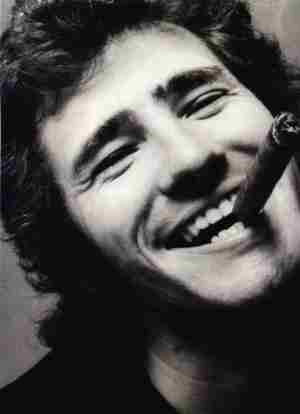
Tim Buckley -- A Chronology, 1947-1997

By Robert Niemi (rniemi@smcvt.edu)


1947 Feb. 14 (Valentine's Day): Timothy Charles Buckley III born in
		Washington, DC.

c.1947-56       Buckley family lives in Amsterdam, NY, an isolated
		industrial city on the Mohawk River, 40 miles northwest of
		Albany.

1952            Hears his first progressive jazz (his mother is a Miles
		Davis fan). 

1956            Buckley family moves, cross country, to Bell Gardens,
		California (in Orange County). 

1960            Tim (age 13) begins to take banjo lessons and joins friend
		Dan Gordon & others to form a folk group; subsequently
		takes up guitar.

1962            Tim (age 15), a freshman at Buena Vista High, makes
		quarterback of the varsity football team; also
		makes the baseball team.

1964            At the end of his sophomore year, decides not to play
		football anymore; joins 'Princess Ramona & the
		Cherokee Riders,' a touring country band;
		subsequently forms two bands with friends Larry
		Beckett & Jim Fielder (i.e., The Bohemians & Harlequins 3) and
		starts to play clubs in the Los Angeles area.  

1965 		Buckley family moves from Bell Gardens to Anaheim (50 miles east
		of L.A.); his parents separate; Tim meets Mary Guibert in
		classes they share at Buena Vista HS; 
June:  		Graduates from high school;  
Sept.:		Attends Ventura [or Fullerton] College for two weeks, then
		drops out;  
Nov.:  		Marries Mary Guibert; works at a Taco Bell by day, continues to
		play Orange County bars, nightclubs, and coffeehouses at night. 

1966 mid-March: Mary pregnant; Tim "discovered" at L.A. club, 'It's Boss,'
		by Mothers of Invention drummer, Jimmy Carl Black, who
		introduces Buckley to Herb Cohen (The Mothers' manager)
		who then books Buckley to an extended summer engagement
		at the Night Owl Cafe in New York City's Greenwich
		Village (where he first meets Lee Underwood and Fred Neil);
		during this period Tim lives on the Bowery with his
		girlfriend, Jainie Goldstein; 
Aug.:  		Elektra Records founder, Jac Holzman, hears Buckley play
		at the Night Owl and signs him to a recording contract on
		the strength of a 6-song demo tape; records first album,
		Tim Buckley, in 3 days in Los Angeles;  
Oct.:  		Divorced from Mary Guibert after a year of marriage; 
Nov. 17:  	Son, Jeffrey Scott, born;  
Dec.:  		Tim Buckley released; Elektra also releases a single containing
		"Wings" and "Grief In My Soul."
  

1967 Jan.:  	Elektra releases a second single, containing "Aren't You
		the Girl"  and "Strange Street Affair Under Blue"; returns to
		New York City, to share a bill at the Balloon Farm with
		The Mothers of Invention; later shares a bill with Nico,
		Downstairs at the Dom (Andy Warhol's club); plays
		Izzy Young's Folklore Center in the Village;
		photographed in Central Park by Linda Eastman (McCartney); 
                plays Doug Weston's Troubadour club in West Hollywood; 
Feb.:           Plays the Swarthmore College [NY] Rock 'n' Roll Festival,
		upstaging the Jefferson Airplane; 
April:          Plays the Cafe Au Go-Go in Greenwich Village (where his	
		performances are attended by the likes of Paul Simon,
		Judy Collins, George Harrison, and Beatles' manager,
		Brian Epstein); headlines at the Main Point in 
		Haverford, CT (Sandy Rhodes opens for him); videotaped by
		CBS while performing "No Man Can Find the War,"
		which is featured in the Leonard Bernstein-hosted TV
		documentary, "Inside Pop--The Rock Revolution";
June:           Records his second album in Los Angeles, Goodbye and Hello
		(released in Sept. & charts at 171 on Billboard); 
June 10:        Plays Magic Mountain Music Festival in Marin County, near
		San Francisco;  
July 18-19:  	Opens for the Jimi Hendrix Experience at Earl Warren
		Showgrounds in Santa Barbara (Moby Grape is also on the
		bill); appears on "Tonight Show"; 
Sept.: 		Elektra promotes Goodbye & Hello with a billboard on
		Sunset Strip;  Elektra releases two singles in the US: 
		"Once Upon a Time"/"Lady Give Me Your Heart"/"Morning
		Glory" and "Once I Was"; Elektra also releases two singles
		in the UK: "Morning Glory"/"Knight Errant" and "Once I
		Was/Phantasmagoria in Two"; plays the Cafe Au Go Go again;
Nov. 14:  	Plays two shows at Garrick Theater in Greenwich Village; 
Late Nov.-early Dec.: Plays the Troubadour again (a concert favorably
		reviewed by Malcolm Terrence);  
Dec. 22:  	Tapes an appearance on The Monkees' TV show (program no.
		26), singing "Song to the Siren," a song not recorded
		until 1970, on Starsailor.  

1968 		On the road "almost continuously," playing festivals,
		concerts, and college campuses throughout the US; 
Spring:  	Guitarist Lee Underwood temporarily dropped
		from band due to problems with alcohol; replaced by
		vibraphonist David Friedman;  
March:  	Elektra releases a single in the US: "Wings"/"I Can't See You"; 
March 8: 	Plays the opening of Bill Graham's Fillmore East (NYC)  with
		Janice Joplin & her band, Big Brother & the Holding Company, 
		and Albert King;
April:	        Travels to England to open for the Incredible
		String Band at London's Royal Festival Hall;
		also plays London's Speakeasy club, and Jim
		Haynes' Arts Laboratory; plays concerts in Copenhagen, and
		a televised concert at the Fantasio Club [pr. Hendrikkade 142,
		Amsterdam]; is interviewed by Dutch journalists for pop
		magazine, Hitweek, and (on April 2) records five songs
		("Morning Glory," "Coming Home to You" ["Happy Time"],
		"Sing a Song for You," "Hallucinations/Troubadour," & "Once I 
		Was") for the John Peel's Top Gear Show, BBC Radio 1 
		(broadcast on April 7); also performs "Happy Time" and
		"Morning Glory" on "Late Night Line Up" a BBC-2 TV progam; 
April 15:       Headlines at Middle Earth club; 
April-May:      Opens for the Byrds at a 4-weekend engagement at the
		Fillmore East; 
May 21-June 2: 	Headlines at the Troubadour again (Mary McCaslin opens
		for him); 
Summer:         When not on tour, spends time at his home in Venice, CA,
		immersing himself in progressive jazz (e.g., Miles
		Davis, Bill Evans, Thelonious Monk, Charles Mingus,
		Gerry Mulligan, Gabor Szabo, Roland Kirk, Ornette
		Coleman, Milt Jackson); 
July 19-21:     Plays the Avalon Ballroom in San Francisco with the Velvet
		Underground; 
Oct.:           Elektra releases another single: "Pleasant
		Street/Carnival Song"; 
Oct. 7:         Returns to London, where he headlines at Queen Elizabeth
		Hall (backed by Lee Underwood, David Friedman & Pentangle
		bassist, Danny Thompson); also appears on the Julie Felix
		Show on BBC TV & (Oct. 1) records two more songs for John
		Peel's Top Gear Show ("Love From Room 109 at the
		Islander" & "The Train") [broadcast Oct. 13]; 
Oct. 12: 	Plays a concert at the Falkoner Center, Copenhagen, 
		Denmark, broadcast on Danish radio (bass played by Nils
		Henning); 
Oct. 18-19: 	Returns to Fillmore East, second on a bill opened by
		Albert King & headlined by The Jeff Beck Group; 
Dec.: 		Records third--and most commercially successful--LP,
		Happy/Sad (released in April 1969, it reaches #81 on
		Billboard and remains on the charts for 3 months).

1969 March 14: 	Headlines at the 2,700 seat Philharmonic Hall at New York's
		Lincoln Center (songs include: "Morning Glory," "Grief in
		My Soul," "Wings,"  "Once I Was," "Pleasant Street,"
		"Love From Room 109," "Buzzin' Fly," "Strange Feeling,"
		"[I Wanna] Testify,"  "Gypsy Woman," & "Down to
		the Bayou"); concert grosses $9,600; 
Autumn:  	Records fourth & fifth albums, Blue Afternoon [#192 on Bill-
 		board's hit parade--his 3rd & last LP to chart] and Lorca
		(released in Jan. & Feb. 1970, respectively) and part 
		of his sixth album, Starsailor; tours to promote new
		albums; band consists of Lee Underwood on guitar,
		Carter C.C. Collins on congas, John Balkin on bass, & Art
		Trip on drums;
Sept. 3-4: 	Headlines again at the Troubadour; contributes songs to the
		soundtrack of Changes, a "youth" film directed by Hal
		Bartlett.  

1970 Feb.: 	Changes record labels (from Elektra to DiscReet, a Warner's
		subsidiary); Straight promptly releases a single from
		Blue Afternoon: "Happy Time"/"So Lonely"; 
late March: 	Headlines at the University of Pennsylvania (partial set
		list: "Gypsy Woman," "Pleasant Street,"  "Morning Glory," 
		"Blue Melody"); concert is harshly reviewed by Rolling
		Stone's Michael Cuscuna); a concert in Los Angeles days
		later also draws a harsh review by L.A. Time's Michael
		Sherman; 
Summer: 	Marries Judy Fern Brejot [a.k.a., "Madame Wu"] and buys a
		house in Laguna Beach (which he subsequently paints
		black); finishes recording his sixth album,
		Starsailor; released in Nov., it garners a 5-star rating
		from Down Beat's Mike Bourne but bombs with the
		record-buying public;
Sept. 25-26: 	Opens for the Mothers of Invention at Pepperland, San
		Rafael (the band at this time consists of Tim, John
		Balkin on bass, Emmett Chapman on "electric stick,"
		Glen Ferris on trombone, & Maury Baker on tympani);  
Nov. 13: 	Plays the Academy of Music in New York City with Van
		Morrison & Linda Rondstadt; 
Nov. 22: 	Publishes a piece on Beethoven in The New York Times; does live
		studio performance with his band for Boboquivari, a 30 
		min. Community TV of Los Angeles show that airs on KCET;
Dec.:		Starts 2-month US college tour to promote Starsailor.
 

1971 Jan. 11: 	Headlines at the Olde Cellar in Vancouver, B.C. (band
		consists of Tim, Buzz & Bunk Gardner, Maury Baker, & John
		Balkin); depressed by the commercial failure of
		Starsailor, retreats into alcohol, barbituates, and
		heroin; band breaks up for lack of work;  injoined not to
		perform, Buckley books himself "under the table" at local
		clubs in Orange County; as music career wanes, loses
		house in Laguna and moves back to Venice/Santa Monica;
		begins writing film scripts with old friend, Dan
		Gordon; acts in Victor Stoloff's unreleased cult film,
		Why?, starring O.J. Simpson, Tim, & Linda Gillen.
  

1972 		Signs with Warner Bros.; 
June: 		Records seventh album, Greetings From L.A. (released in
		Oct.);
Summer: 	Plays an engagement at The Boarding House in San Francisco;
Autumn: 	Tours with Frank Zappa to promote new album; 
Sept. 22-23: 	Opens for the Mothers of Invention at the Felt Forum, NYC
		(also plays with Zappa in Montreal, Quebec); 
Dec. 9: 	Opens for the Mothers at Pasadena Civic Auditorium. 
 

1973 		Records eighth album, Sefronia (which is released in
		Nov.);  
Nov. 27: 	Records a live date at Long Island's Ultrasonic Studios
		for WLIR; Tim's band consists of Joe Falsia on lead
		guitar, Bernie Mysior on bass, Buddy Helm on drums, &
		Mark Tiernan on keyboards;
late Dec.: 	Headlines at Max's Kansas City in Greenwich Village (Kathy
		Dalton opens for him).  

1974 May 21: 	Returns to England & appears on The Old Grey Whistle Test
		(band consists of Charles Whitney on guitar, Tim Hinkley on
		bass, and Ian Wallace on drums); 
July: 		Appears as the opening act at Frederick Bannister's 1st
		annual Knebworth Festival (Hertfordshire) [concert bill
		includes Van Morrison, The Doobie Brothers, and The Allman
		Brothers Band, The Mahavishnu Orchestra, and The Alex
		Harvey Band]; Tim's band consists of Art Johnson on
		guitar, Jim Fielder on bass, Mark Tiernan on keyboards, &
		Buddy Helm on drums; set list: "Nighthawkin,'"
		"Dolphins," "Get on Top," "Devil Eyes," "Buzzin' Fly," "Sweet
 		Surrender," and "Honeyman";  
July 27: 	Returns to New York City to open for Blood, Sweat & Tears
		at Wollman Rink (songs include "Sally Go Round the Roses,"
		"Honey Man," "Quicksand,"  & "Gypsy Woman"); releases ninth
		album, Look at the Fool; briefly sees son, Jeffrey, age 8 (for
		the first and last time); releases ninth studio album,
		Look at the Fool; subsequently dropped by Warner's;
		interviewed by Chrissie Hynde for MOJO magazine.

1975		Meets "Cool Richard" Keeling (a graduate student in UCLA's
		Ethnomusicology Dept.); up for part of Woody Guthrie in Hal
		Ashby's film, Bound for Glory [part goes to David
		Carradine after Tim's death];  
May 9-11: 	Plays a 3-night engagement at the Starwood in Los Angeles (band
		now consists of Joe Falsia on guitar, Jeff Elrick on bass,
		Buddy Hamilton on drums, and John Harrison on organ);	
		plays dates in Detroit and in Texas; 
June 29, 9:42 pm: Dies (age 28) of an accidental heroin overdose at his
		apartment in Santa Monica; autopsied by coroner Dr.
		Joseph Choi, who concludes that Buckley died "from acute
		heroin/morphine and ethanol [alcohol] intoxication due to
		inhalation and ingestion of overdose"; 
early July:  	After wake and funeral at Wilshire Funeral Home in Santa
		Monica, Buckley's body is cremated; charged with murder
		for supplying Buckley with the fatal overdose, Richard
		Keeling is convicted of manslaughter and serves four
		months in prison. 

1977 		Lee Underwood publishes "Tim Buckley: Chronicle of a
		Starsailor," a biographical portrait of Buckley in the
		June 16th edition of DownBeat.
  

1978 		The Late Great Tim Buckley (WEA 250770-1) released
		in Australia; the soundtrack of the film, Coming Home
		(with Jane Fonda), includes "Once I Was."  

1983 		The Best of Tim Buckley, a compilation album released on Rhino
		Records; This Mortal Coil [UK] record a cover version of
		"Song of the Siren" (another version, recorded by an
		anonymous session team, is later used in a British TV ad
		for a vacation package).  

1988 		Brian Hogg publishes a biographical essay on Buckley in
		the March issue of Record Collector (no. 103) [UK]. 

1990 		Dream Letter, a double live album of the 1968 Queen Elizabeth
		Hall concert in London is released to critical acclaim.
  

1991 April 26: 	Island Records producer Hal Willner organizes "Greetings
		From Tim Buckley," a tribute concert. Held at the Church
		of St. Ann and the Holy Trinity, Brooklyn Heights, NY,
		the show features Anthony Coleman (keyboards), Sharon
		Freeman (French horn and piano), Hank Roberts (cello),
		guitarists Gary Lucas, Robert Quine, Barry Reynolds, G.E.
		Smith, and Elliot Sharp. Other performers include
		Richard Hell, Syd Straw, Shelley Hirsch, Julia Heyward,
		and Cheryl Hardwick. The show also provides Tim's
		24-year-old singer/musician son, Jeff, with his first
		important public exposure; Scott Isler publishes "Hello &
		Goodbye: The Life & Death of Tim Buckley" in the July
		issue of Musician magazine.

1994		Morning Glory CD released in the UK, consisting of 7
		tracks culled from BBC performances taped in 1968 and	
		1974. 

1995		Release of second and third CDs of previously unreleased
		material: (1) Live at the Troubadour, 1969 and (2)
		Return of the Starsailor [previously unissued live
		recordings, 1967-75, released in the UK only]; Martin
		Aston publishes "Tim Buckley: The High Flyer," a
		biographical portrait of Buckley in the July edition of MOJO
		magazine [UK]; 
Oct.: 		KKUP FM, Cupertino, CA, broadcasts a live performance by
		The Tim Buckley Tribute Band called "Tim Buckley: Too Much
		Talent, Too Little Time"; "A Tim Buckley Home Page"
		(created by Carol Mariconda; subsequently maintained by
		John Walker after Feb. 1996) appears on the internet. 

1996		Release of Honeyman, a fourth CD of previously unreleased
		material culled from the tape of a live radio
		broadcast on New York's WLIR, Nov. 27, 1973.

1997:		"A Tim Buckley Home Page" is continued & replaced by "The
		Tim Buckley Archives" (maintained by Suzanne Bodoin) on
		the internet; 
May: 		Paul Barrera publishes Once He Was: The Words and Music of
		Tim Buckley (Andover, Hampshire, UK: Agenda Ltd.); 
Thurs., May 29: In Memphis to record his 2nd studio album, Jeff Buckley, 
		30, drowns while swimming in a Memphis marina near Mud
		Island; his body is recovered from the Mississippi River 6
		days later, on Wed., June 4th; Jeff's accidental death
		comes exactly one month shy of 22 years after the death of
		his father.